Cannabis Vaporizers in Germany: Market Analysis, Margins, and Wholesale Opportunities
Cannabis Vaporizers in Germany: Market Analysis, Margins, and Wholesale Opportunities
Germany is currently the largest cannabis vaporizer market in Europe. According to Grand View Research, the market was valued at $420 million in 2024. It is expected to grow to $967 million by 2030 – an annual growth rate of nearly 15 percent. For wholesalers entering this segment now, this is not an abstract forecast. It is concrete revenue potential already reflected in order volumes and prescription explosions.
The medical cannabis market alone reached a value of nearly one billion dollars in 2025 – $997 million, to be exact. This represents a 155 percent increase year-over-year. Behind this are over 3,300 percent more prescriptions than in March 2024. Patients who previously used rolling papers are increasingly turning to vaporizers. Not for lifestyle reasons. Out of medical necessity.
Market Size and Growth in Numbers
The global cannabis vaporizer market is estimated at $6.83 billion in 2025. Germany accounts for between 5 and 11 percent of that, depending on the measurement method. Grand View Research cites 7.2 percent, while Fortune Business Insights puts it at 11 percent. The range shows that no one has the complete picture. But everyone agrees that Germany leads.
The portable sector dominates with a 71 percent market share. German customers primarily buy battery-operated devices for on-the-go use. Desktop devices for stationary use make up the rest. The trend towards portable devices is not surprising. Medical patients do not want to stay at home to do their therapy. Recreational users want to be discreet. Both groups need the same product: a reliable, portable vaporizer.
So the market is growing by about 15 percent each year. With an average annual growth rate of 14.9 percent, the market doubles every five years. Those who stock vaporizers wholesale today will likely sell twice as many units by 2030 as they do now. The question is not whether the market is growing. The question is whether your inventory is growing with it.
The Three Segments: Pens, Portables, Desktops
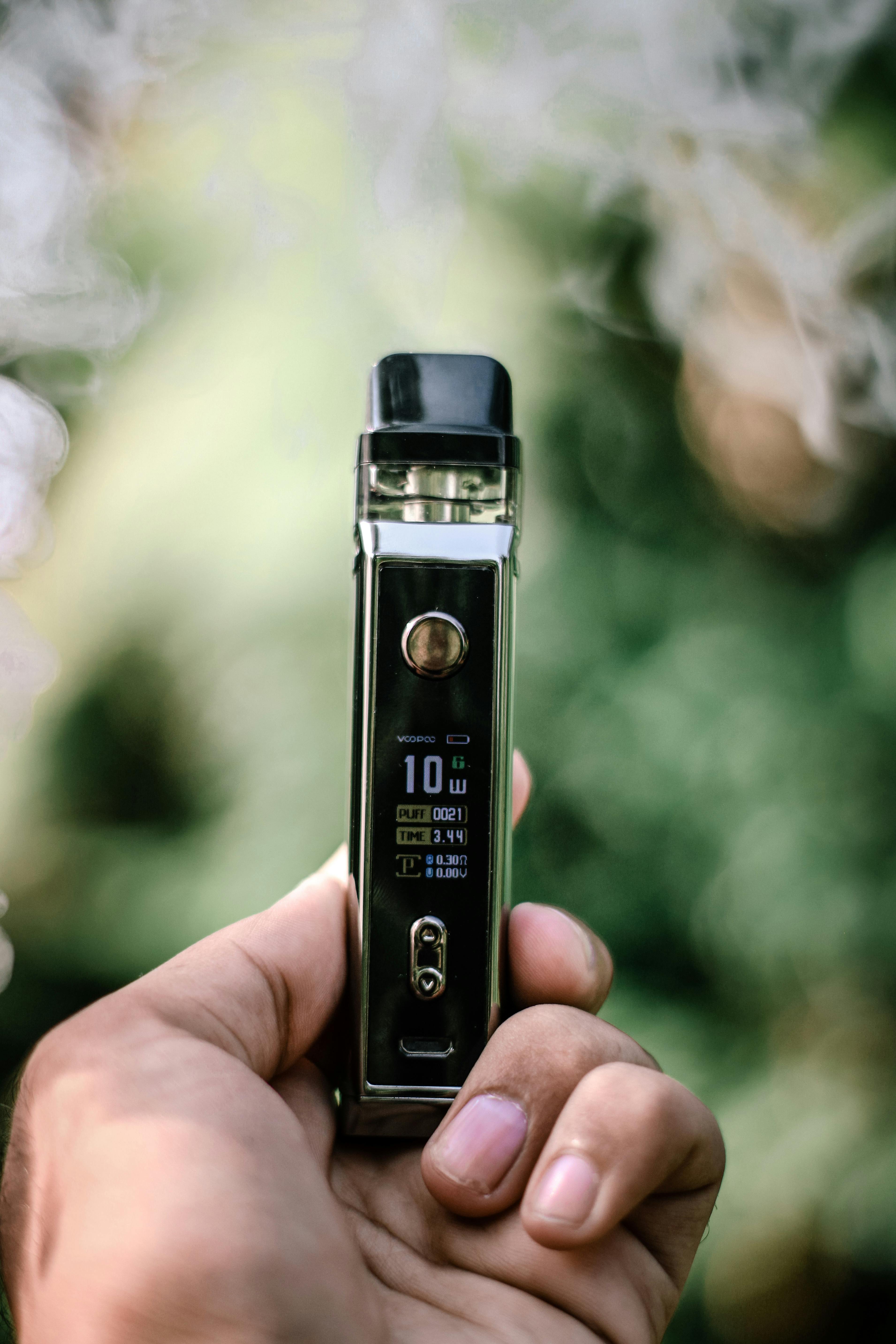
The German market can be divided into three device categories: pen vaporizers for oils and concentrates, portable herb vaporizers, and stationary desktop devices. Pen devices are inexpensive and easy to use. They require little consultation, rotate quickly, and are suitable for impulse purchases at the point of sale. The downside: they often promise more than they deliver. Cheap pens with a purchase price under €30 lead to returns.
Portable herb vaporizers are the core segment. Brands like Storz & Bickel, DynaVap, PAX, and DaVinci play here. End-consumer prices range from €60 to €400. The 71 percent dominance of the portable segment in Germany shows where the money is flowing. A wholesaler who ignores this segment is consciously leaving revenue on the table.
Desktop vaporizers are niche products with higher margins. A Volcano by Storz & Bickel costs around €500 in the trade. Sales volumes are lower, but the margin per unit is higher. Desktop devices are relevant for pharmacies and medical specialty retailers. Stationary use for chronic patients often prefers a permanently installed device at home.
Who Dominates, and What Dealers Keep
Storz & Bickel from Tuttlingen controls about 18 percent of the global market. That's not a niche estimate. It's the gold standard. The Mighty and Volcano are medically certified, which is a huge advantage in Germany. Canopy Growth, the owner of Storz & Bickel, reported segment revenue of $22 million for the fourth quarter of 2024. That was a 43 percent increase year-over-year. The gross margin was 41 percent. These numbers show: medical certification pays off.
On the manufacturer side, Topgreen Technology follows with a 14 percent market share. The company primarily produces in Asia and supplies OEM customers. For wholesalers, this means: besides well-known brands, there is also a broad layer of white-label and private-label products that work with significantly lower purchase prices. A no-name portable from China might cost the wholesaler €15 to €25. The same device class with Storz & Bickel branding has a purchase price of €150 to €200.
The question for wholesalers is: What margin remains per segment? For a China portable at €20 purchase and €45 sale to the dealer, a 55 percent margin remains. For a branded device like the Mighty at €180 purchase and €280 sale, a 36 percent margin remains. But the absolute margin is higher for branded products: €100 compared to €25 for the no-name device. Those who buy strategically mix both. Fast rotation through budget devices, solid contribution margins through branded products.
Medical vs. Recreational: Two Markets, One Product
Since April 2024, Germany has had the Cannabis Act (CanG). Possession and home cultivation are legal, but commercial sale is not. This means: there is no legal recreational retail market for vaporizers. But the medical market is exploding.
In 2025, over 200 tons of medical cannabis were imported into Germany. That is the highest figure of any European country. Patients with pain syndromes, multiple sclerosis, or chronic diseases get cannabis on prescription. The number of prescriptions has increased by more than 3,300 percent from March 2024 to December 2025. The average price per gram fell from €8.33 to €5.23. Medical cannabis is becoming more affordable, accessible, and commonplace.
For the accessories market, this is the driving force. Doctors explicitly recommend vaporizers as a gentler alternative to smoking. Pharmacies increasingly carry medically certified devices. The 35 teleclinics in Germany – second worldwide behind Australia – prescribe cannabis digitally. This removes geographical barriers. A patient in Saxony can get a prescription from a Berlin teleclinic and pick it up at their local pharmacy. The only step in between is a vaporizer purchase.
The recreational market continues to exist beneath the surface. Cannabis Social Clubs with up to 500 members are allowed to collectively grow and distribute. No commercial sale, but distribution to members. These clubs need accessories. Grinders, containers, vaporizers. The 500-member limit per club sounds small. But multiplied by the clubs being founded nationwide, it results in a considerable demand. No club member wants to consume their homegrown cannabis with cardboard and plastic bottles.
What Wholesalers Should Do Now
Sort broadly. A wholesaler who only carries premium loses price-conscious customers. A wholesaler who only carries cheap goods loses pharmacies and medical specialty retailers. The right mix is a three-tier portfolio: budget pens with an MSRP of €25 to €50, mid-range portables for €80 to €150, and medically certified devices starting at €200.
Do the math. With 15 percent annual market growth and a German market currently valued at $420 million, the growth alone for 2026 amounts to over $60 million. To capture even a fraction of that as a wholesaler, you need inventory. Not next month. Now.
Pay attention to certifications. Medical devices like the Volcano Medic or Mighty Medic are approved in Canada, Europe, Australia, and New Zealand. In German pharmacies, these certifications open doors. A vaporizer without medical clearance ends up in the head shop. With clearance, it ends up in the pharmacy. The difference in the wholesale price per unit can be €50 to €100.
ivory.green Team
Marktanalysen & Branchennews für Cannabis-Accessoires-Großhändler.